
How I Quit Sugar
As I explained in my book Walk Yourself Happy, sugar comes in many forms, and is hidden in foods that you wouldn’t expect. It’s not just in sweets, cakes and biscuits, but things like sauces, soups, fruit juices and meat products.
The average American now consumes approximately 126g of sugar a day. That is about ten tablespoons. We are not far behind in the UK, packing away approximately 93g, or around seven and a half tablespoons a day. There’s a huge body of evidence showing the damage too much sugar does to human cardiometabolic health.
Why fructose is the problem
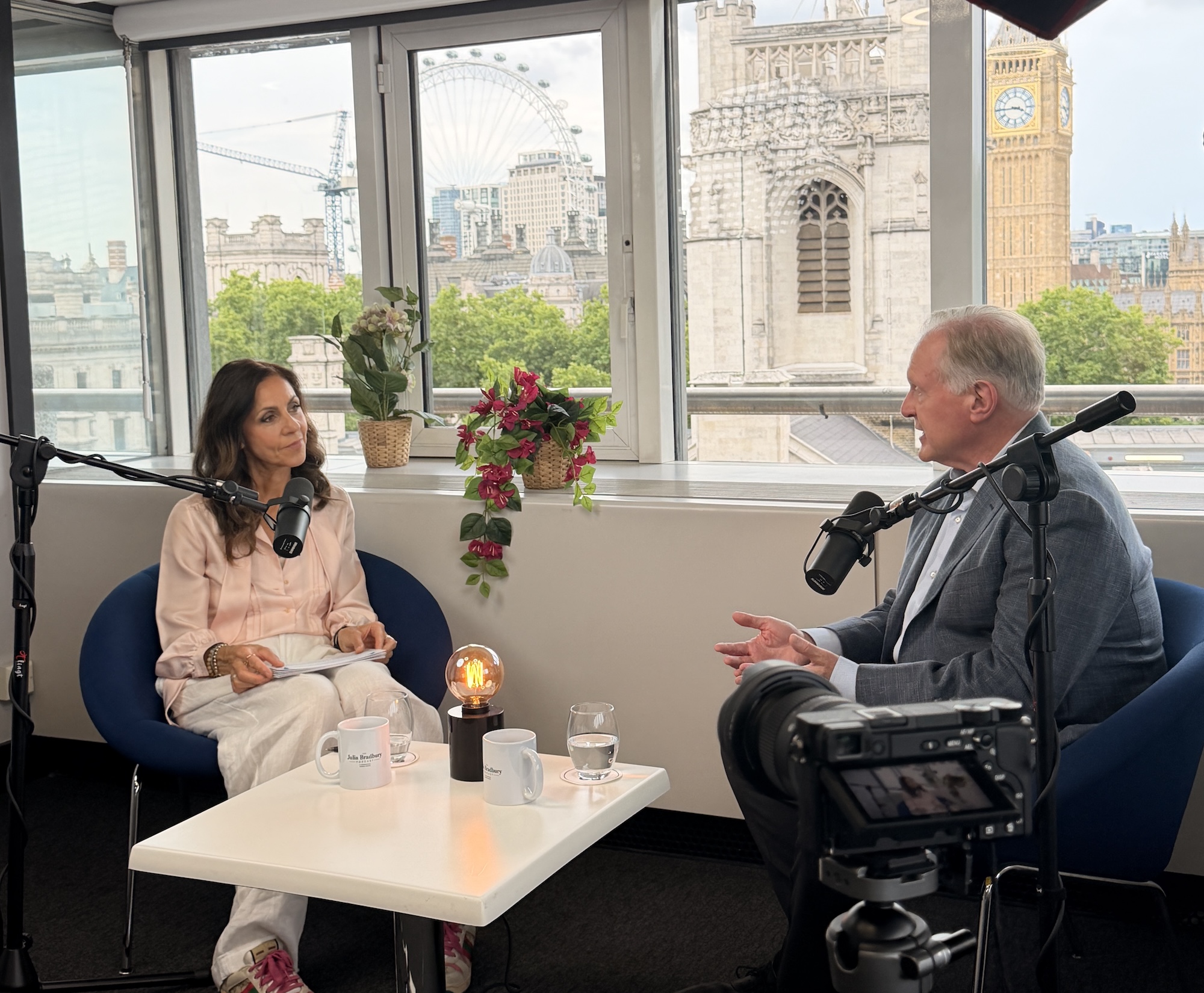
When I interviewed Professor Robert Lustig on The Julia Bradbury Podcast, he didn’t pull a single punch. Robert is Emeritus Professor of Paediatrics in the Division of Endocrinology at the University of California, San Francisco (UCSF), a paediatric neuroendocrinologist who spent decades running a clinic for children with obesity and metabolic disease. He is the author of Fat Chance and Metabolical, and his lecture Sugar: The Bitter Truth has been watched millions of times online. He even took a year out to study law, to understand how a personal health problem becomes a public health crisis, and how Big Tobacco got away with it for so long.
His headline is not subtle. Fructose, the sweet half of sugar, is in his words a ‘dose-dependent mitochondrial toxin’. Four words, and each one matters.
First, a quick bit of chemistry. Table sugar (sucrose, whether it comes from cane or beet) is one molecule made of two: glucose and fructose, joined together. Honey, syrups and fruit contain the same two molecules in varying proportions. The fructose in an orange is exactly the same molecule as the fructose in the sugar bowl. What differs, as we’ll see, is the dose and the packaging.
Dose-dependent means the harm depends on how much. Robert compares it to alcohol: one beer, no problem; two, it depends who you are; keep going and you know how the evening ends. Your body has the capacity to deal with a little fructose. It’s the relentless volume that does the damage.
Mitochondria are the tiny power stations inside almost every cell, turning the food we eat into ATP, the chemical energy our cells actually run on. Robert’s argument is that fructose, in excess, damages them directly, in the same way alcohol does, just more slowly. He sorts toxins into three groups: acute ones like ricin and nerve agents, medium ones like arsenic and tobacco smoke, and weak, chronic ones. Alcohol and fructose sit in that last group. We consume them, we love them, we can get hooked on them, and the harm builds quietly over years. Both are handled mainly by the liver, and when the liver is overloaded with either, it turns the excess into fat.
This is where it gets interesting, because the two halves of sugar are not equal. Glucose is the energy of life. Every cell in your body can burn it, and your brain relies on it heavily. It is so essential that your body doesn’t leave the supply to chance: if you don’t eat any, your liver makes it from protein and fat. As Robert put it, ‘You have to have it, but you don’t have to consume it.’ So yes, we all biologically need a small amount of glucose, but strictly speaking we don’t need to eat it, because we can make our own.
Fructose is a different story. According to Robert, there is not one biochemical reaction in any vertebrate that requires fructose from the diet. Not one. We have no need for it whatsoever. We just like it. His best guess at why is that plants evolved sweet fruit to tempt animals into eating it and spreading their seeds. In other words, we’re the delivery service.
So what does too much of it do? Well it ages us for one. When you roast a chicken and the skin turns golden, or caramelise sugar in a pan, you’re watching something called the Maillard reaction, the browning reaction. The same thing happens inside our bodies, all the time, as sugars bind to proteins. You can’t stop it, but you can change its speed. Glucose does it relatively slowly. Fructose, because of its chemical shape, does it around seven times faster, and every reaction releases a little hydrogen peroxide, which damages the cells around it. Robert links this to cataracts, to wrinkles, and to research showing that people with more sugar in their diets have an older epigenetic age: how old your body thinks it is, rather than how many birthdays you’ve had. He told me fructose is ‘the cause of wrinkles’, but I’d add the reminder that excess time in the sun and smoking does too. But as a contributor, the biology stands up, and it’s a strong argument to stop the vain among us (Uh-hum 👋🏽) mid-biscuit.
The second is appetite. When glucose arrives in your system, levels of ghrelin, the hunger hormone, fall. Fructose doesn’t suppress ghrelin in the same way, so your body doesn’t fully register that you’ve eaten. There’s no off switch, which helps explain how anyone can work through a family-sized bag of sweets without ever feeling full. Combine that with a taste our brains are wired to seek out, and you have a substance that drives its own consumption.
The third is metabolic. In Robert’s obesity clinic at UCSF, the more sugar a child was eating, the higher their insulin, and the less well the treatment worked. Sugar consumption was the factor that undermined success every single time. If your mitochondria are struggling in your liver, he says, they’re struggling in your brain too.
Robert is a campaigner as well as a scientist, so it’s worth being clear about where his argument is strongest. The evidence that too much fructose, particularly from sugary drinks, raises liver fat and blood fats, and is linked to type 2 diabetes and fatty liver disease, is solid. The word ‘toxin’ is more contested. When researchers pool the trials, fructose swapped calorie for calorie for other carbohydrates looks far less harmful; the damage shows up mainly when it comes on top of everything else we eat. Which, for most of us, is exactly how it arrives. That’s why I think ‘dose-dependent’ is the most important of Robert’s four words.
An orange is not a glass of orange juice
Which brings me to breakfast, and the glass of orange juice so many of us still think of as the healthy option. Robert’s figures: an orange contains about 8g of sugar, around half of it fructose, while an eight-ounce (240ml) glass of orange juice contains about 25g, roughly three times as much.
His numbers are American, so I checked our own supermarket shelves. UK orange juice typically contains around 8g of sugar per 100ml. That means the 150ml glass the NHS recommends has about 12g, and the 250ml tumbler most of us actually pour has about 20g. A medium orange contains around 12g of sugar, plus roughly 3g of fibre. The juice has almost no fibre at all. So a standard glass gives you the sugar of nearly two oranges, in a form you can drink in thirty seconds, when you’d struggle to sit down and eat two oranges back to back.
And that’s the real problem: not just how much sugar, but how fast it gets into your bloodstream. In a whole orange, the sugar is locked inside a matrix of fibre. Robert explains it with a kitchen colander. Run water through it and it pours straight out. Throw in a blob of petroleum jelly and the water still runs through. But smear that jelly in a thin film all the way round the inside, and suddenly the water can’t get out. You’ve made a barrier.
Your gut works the same way. The insoluble fibre in fruit (the pith, the stringy membranes, all the bits a juicer strains out) is the colander. The soluble fibre, such as pectin, the stuff that sets jam, plugs the holes. Together they form a barrier along the lining of your intestine that slows the sugar’s journey into your bloodstream. Your liver gets a trickle instead of a flood, and more of the sugar travels further down the gut, where your microbes feed on it instead. You protect your liver and feed your gut bacteria at the same time. As Robert puts it, ‘When God made the poison, he packaged it with the antidote.’ Juicing throws the antidote away.
The data back this up. A large Harvard analysis published in the BMJ in 2013, which followed more than 187,000 nurses and health professionals for many years, found that people who ate more whole fruit, particularly blueberries, grapes and apples, had a lower risk of type 2 diabetes, while those who drank more fruit juice had a higher risk. It’s observational, so it can’t prove cause and effect on its own, but it points in exactly the direction the biology predicts. Robert’s summary: fruit is okay; fruit juice is not.
The NHS agrees, in its own quieter way. Sugar inside whole fruit doesn’t count towards your free sugars, but the sugar in fruit juice and smoothies does, putting it in the same category as the sugar you stir into your tea. The NHS advises no more than 150ml of juice and smoothies a day in total, and however much you drink, it only ever counts as one of your five a day. A 250ml glass at breakfast uses up two-thirds of your 30g daily maximum before you’ve eaten a thing.
I certainly ate more than the NHS recommended maximum of 30g of free sugars a day. I was well known for my sweet tooth. And now? I don’t. I stopped cold turkey and switched to dark chocolate (85 per cent cocoa or higher) and nut butters, which are a good replacement for sweet flavours (hazelnut rather than peanut). This was just one part of a huge overhaul of my diet which I undertook after my cancer diagnosis and mastectomy.
Despite being a chocoholic, it only took a fortnight to re-educate my taste buds. Today, when I do have a slice of cake or taste the kids’ homemade cookies, I make sure it’s after a full meal, never on an empty stomach. If you eat your veggies first, the fibre, protein and fat slow down how quickly your stomach empties, leading to a lower glucose spike. That’s better for you.
How I quit sugar
1. Stop snacking
This was the first thing I did, and it made the biggest difference. No eating between meals. Full stop. That one rule quietly deletes the biscuit dunked in your tea, the elevenses someone has left in the work kitchen, and the bag of Haribo that somehow empties itself on a two-hour drive. When I looked honestly at where my sugar was coming from, most of it wasn’t at mealtimes at all. It was grazing. My taste buds recalibrated within a couple of weeks, but the habit took longer: the first four weeks are genuinely hard, because your body is used to a top-up every few hours and it will let you know. Make it a rule rather than a resolution. Rules don’t negotiate.
2. Clear the cupboards
Get rid of the sugary treats in the house. I’d rather not spend my willpower arguing with a packet of chocolate digestives at four o’clock. If it isn’t there, you can’t eat it.
3. Close the kitchen at 8pm
At home, I don’t eat after eight in the evening, and there’s good science behind it. Your body runs on a clock, and as evening draws in it gets worse at handling glucose: insulin sensitivity drops as you wind down towards sleep, so the same food eaten late produces a bigger, longer blood-sugar rise than it would at lunchtime. In a tightly controlled Harvard study, people who ate identical meals four hours later felt hungrier, had lower levels of leptin (the hormone that tells you you’re full) and burned fewer calories. Lying down on a full stomach also makes reflux more likely, which is why the NHS suggests not eating for three to four hours before bed if you suffer from heartburn.
And then there’s your gut. When you stop eating, your small intestine starts what’s sometimes called its housekeeping cycle: waves of muscle contraction that sweep leftover food and bacteria down towards the colon. Eating switches it off. It’s a lovely piece of biology, and Professor Satchin Panda of the Salk Institute, one of the world’s leading circadian rhythm researchers and author of The Circadian Code, agrees. I interviewed him in my book Hack Yourself Healthy and what he has to say about food and circadian rhythms is fascinating.
4. Sweet things come last
If I have something sweet, it’s straight after a proper meal, never on its own. When vegetables, protein and fat reach your stomach first, they slow down how fast it empties, so the sugar that follows trickles into your bloodstream rather than flooding it. Researchers at Weill Cornell Medicine in New York found that when people ate their carbohydrates last, after vegetables and protein, their blood-sugar spikes were around 40 per cent lower. The studies are small, and mostly in people with type 2 diabetes or prediabetes, but the principle makes sense for all of us. Fewer spikes mean fewer crashes, and it’s the crash that sends you back to the biscuit tin.
5. Swap, don’t just stop
Nut butters, dark chocolate (85 per cent cocoa or higher) and blueberries. I know. They sound a bit worthy to begin with. But once you’ve gone a few weeks without that sweet, sweet hit of refined sugar, your palate resets, and a handful of blueberries starts to taste like a bowl of forbidden forest fruits.
6. Go savoury at breakfast
Start the day with fibre and protein, not sugar. Eggs, unsweetened Greek yoghurt with seeds, smoked mackerel on rye. A sweet breakfast sets you up for a spike and a mid-morning slump. One small study from the University of Missouri gave young women who normally skipped breakfast either a high-protein breakfast (eggs and lean beef) or a bowl of cereal with the same calories. After the protein breakfast they snacked less on high-fat foods in the evening. Twenty people is a small study, but it matches exactly what I’ve found.
7. Try bitters (alcohol-free)
Bitter taste receptors aren’t just on your tongue. They’re also in the lining of your gut, and in lab and animal studies, bitter compounds trigger the release of GLP-1, the gut hormone that weight-loss jabs mimic, which slows digestion and signals fullness. Our grandparents’ aperitifs and digestifs may have been on to something. But the human evidence is still thin, so treat this as an experiment. It works for me. One important caveat: most traditional bitters are made with alcohol, so choose an alcohol-free version, or simply eat bitter foods such as rocket, radicchio, chicory, dandelion leaves and grapefruit at the start of a meal.
8. Walk it off
If you’re bored and craving something sweet, go for a walk. This is where my two worlds collide. Professor Adrian Taylor at the University of Exeter found that a 15-minute brisk walk reduced chocolate cravings in regular chocolate eaters, and in a follow-up study, office workers who walked ate roughly half as much chocolate as those who sat. A later study found the same effect in overweight adults, even when they were stressed and holding a sugary snack in their hands. The studies are small and short-term, but a walk costs nothing, and at worst you’ve had a walk, with all the extra benefits that brings.

